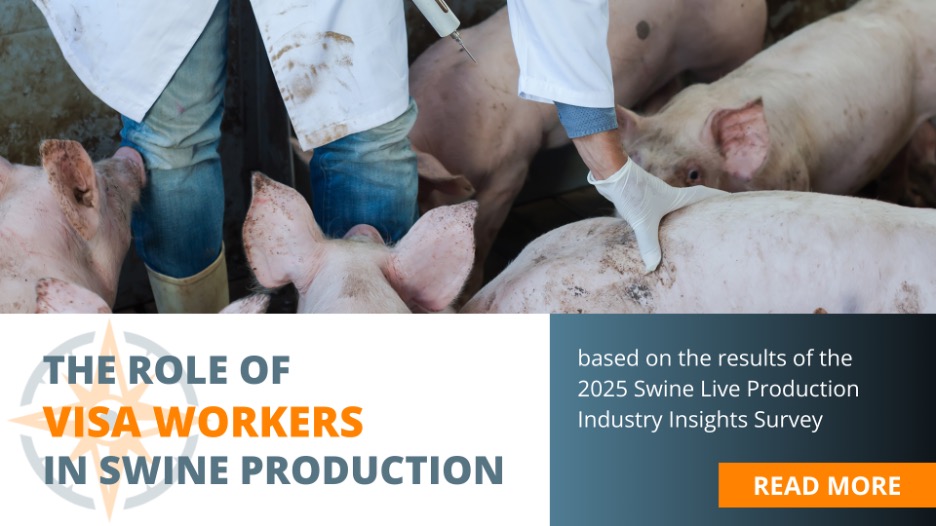
One of the lesser-talked-about but crucial dynamics in swine live production is the role of visa-supported employees.
In the 2025 Swine Live Production Industry Insights Survey, nearly half of respondents reported that more than 25% of their workforce is on a TN or similar visa. Specifically, 30.6% reported that more than half of their team is visa-dependent, while another 18.1% reported 26–50% .
These numbers are too significant to overlook. Visa workers have become essential to sustaining day-to-day operations in many swine systems—especially those facing local labor shortages or high turnover in rural areas.
The Jobs Visa Workers Are Filling
Though the survey didn’t break down roles by visa status, conversations in the industry point to visa-supported employees filling key technical and farm-level leadership roles: sow barn technicians, wean-to-finish supervisors, even department managers. Some companies also utilize visa programs to source veterinarians or farrowing specialists, especially when domestic supply is tight.
Visa programs like TN (for Canadian and Mexican citizens) and H-2A (for agricultural labor) have become a pillar for farm-level staffing. Without these workers, many farms would face operational gaps or reduced performance.
The Hiring Challenges Behind the Trend
This heavy reliance on visa labor connects with another survey result: 23.6% of respondents said relocation or visa challenges were one of the main reasons difficult roles take so long to fill.
That means employers aren’t just facing a talent shortage—they’re also navigating complex legal and administrative systems to bring qualified people in. Between visa processing timelines, housing requirements, and regulatory constraints, it’s not a simple fix.
Why This Matters for Employers
If a significant portion of your workforce is visa-based, your people strategy needs to account for:
- Retention: How do you keep good workers once they’re here?
- Compliance: Are you set up to handle paperwork, renewals, and inspections?
- Mobility: Can you move workers between farms or locations as needed?
- Succession: What happens if a visa isn’t renewed or delayed?
The visa strategy is about maintaining operational stability.
What It Means for the Industry
If nearly half the workforce is visa-supported in some operations, that’s no longer a backup plan—it’s part of the core model. It also means the U.S. swine industry is tied tightly to immigration policy, cross-border workforce dynamics, and geopolitical stability.
Looking ahead, companies may need to:
- Build internal capacity to reduce reliance where possible
- Improve onboarding and cultural support for international employees
- Collaborate with trade groups to advocate for better agricultural labor pathways
Final Thought
Visa-supported workers are a vital part of how many pork operations function today abd are not just a short-term patch. The more intentional we are about how we recruit, retain, and support them, the stronger and more resilient the industry becomes.
About the Author
Cris Soronio joined Continental Search in 2023 as a Talent Scout and was the first one from her batch to receive a Revenue Generator award. Five months later, Cris was promoted to Recruiter and has been connecting top talents in swine live production roles in the US and Canada with leading organizations in these sectors.